
The Gift of the Present

The Gift of the Present
On the page: A gathering on presence, the Trinity and the rose Crossing Hedgerows Sanctuary
Have this page on the screen as people arrive.
The gathering runs about two hours. A rough guide: opening circle 20 minutes, Matthew 11 and the teaching on the Trinity 20 minutes, Matthew 3 and the rose 15 minutes, the story 15 minutes, the silent walk 25 minutes, journaling 10 minutes, sharing and snack 20 minutes, the closing song 5 minutes. Let the day set the pace.
Before anyone arrives: lay the fire; set out chairs or blankets; have roses, rose oil or rose-petal tea ready; bring the Christmas Carol picture book, journals or paper and pencils, and something to play the closing song on.
Winter trails can be icy. Check the walking path the day before, and have a walking stick or two by the fire for anyone who would like one.
To turn pages, tap the right side, press the right arrow key or use the arrow at the bottom. Press N to show or hide these notes.

“Come unto me, all ye that labour and are heavy laden, and I will give you rest. Take my yoke upon you, and learn of me; for I am meek and lowly in heart: and ye shall find rest unto your souls. For my yoke is easy, and my burden is light.”
On the page: “Come unto me, all ye that labour and are heavy laden, and I will give you rest. Take my yoke upon you, and learn of me; for I am meek and lowly in heart: and ye shall find rest unto your souls. For my yoke is easy, and my burden is light.”
Read these three verses slowly once everyone is settled in the circle.
If some were with us for Lay Your Burdens Down, you might say: "Last time we laid our burdens down. Today we look at where we find rest once they are set down: here, in the present moment."
A yoke joins two animals so they can pull together. Christ does not take the work of living away; he walks beside us and shares the load. "Learn of me" is an invitation to learn his way of carrying life: gently, humbly, one step at a time.
There is no need to explain more. Let a moment of quiet follow.

Our gathering at a glance
On the page: Opening circle. Welcome, our agreements, a round of thanks and the Doxology. The gift of the present. Matthew 11, and what the Trinity shows us about presence. Plant magic. The rose, an herb for presence. A story. A Christmas Carol by Charles Dickens. A silent walk. The five elements, then journaling by the fire. Sharing and closing. Snack, a gift from your sit spot, and O Thou in Whose Presence .
A quick look at the day helps newcomers relax.
A simple overview is enough: "We'll open in a circle, think together about the gift of the present moment, meet the rose, hear a story, take a silent walk, write by the fire, share, and close with a song."
Mention practical things: where the restroom is, that the walk is gentle and that anyone who would rather stay by the fire is welcome to. If it's cold, invite people to keep their hats and gloves on, and tell them where the hot drinks are.

Welcome
On the page: Welcome everyone in with an introduction and gather into a circle. There is nothing you need to know or do. Just be here.
Greet people warmly as they arrive and, when everyone is here, invite them into the circle. Make room for children and elders first, and offer a chair to anyone who would rather not stand.
Introduce yourself and the place where you gather in a few sentences: who you are, what this place is, and why we gather. If there are newcomers, name that gently: "If this is your first time with us, you are so welcome. There is nothing you need to know or do. Just be here."
That last line is the whole teaching of today in miniature. You might come back to it later: "Just be here" is the gift of the present.

Our agreements
On the page: We speak from the heart and listen with the heart. What is shared in the circle stays in the circle. We do not fix, advise or correct one another. We simply listen. Anyone may pass. Saying “pass” is always welcome. We care for the land and leave it as we found it.
Go over the circle agreements together, so everyone knows how we care for one another today.
Read each one aloud, or invite different people in the circle to read one each.
Ask the group whether anyone would like to add an agreement, and whether everyone can say yes to them. A nod or a show of hands is enough.
On a cold day, you might add a practical one: "If you're cold, tired or need to sit, just say so. Looking after yourself is part of being present."

A round of thanks
On the page: Go around the circle and let each person share their name and one thing they're thankful for today. Leader: begin the round yourself. A single sentence is plenty.
Begin the round yourself, so people hear how short and simple it can be. For example: "My name is ____, and today I'm thankful for the first snow on the pines."
Then let the round move around the circle in one direction. Children often love this part.
Gratitude is one of the quickest ways into the present moment. To be thankful, we have to notice what is here, right now. You might point that out after the round: "Did you notice? Every one of those thanks was about something real and present."
Praise God, from whom all blessings flow; Praise him, all creatures here below; Praise him above, ye heavenly host; Praise Father, Son, and Holy Ghost. Amen.
On the page: Praise God, from whom all blessings flow; Praise him, all creatures here below; Praise him above, ye heavenly host; Praise Father, Son, and Holy Ghost. Amen.
Invite everyone to stand together for the Doxology. You might sing it twice: once with you leading, and again with everyone joining in fully.
Point out the last line before you sing today: "Praise Father, Son, and Holy Ghost." The whole gathering grows out of those three names. We sing them now, and in a few minutes we will look at what they can show us about living in the present.

Setting down our burdens and being in the present moment gives us rest.
On the page: Setting down our burdens and being in the present moment gives us rest.
This is the heart of today. Read it slowly and let it settle.
As long as we are alive, there will always be a present moment, which we can either notice or miss while we are caught up in the past or the future. Most of our worry lives in the future, and most of our regret lives in the past. The present moment is usually far lighter than either.
You might invite a few breaths together: "Let's take three slow breaths. Notice the cold air, the sounds around us, the ground under our feet. That's the present. It's always here waiting for us."
What the Trinity shows us
On the page: We find in the Bible that within the concept of the Trinity we are shown how to find the supreme gift of presence. Father Creator · Future Just as we ourselves have the power to create for the future. Son Preserver · Present The ability to be in the now, and to be in the flow of life. Holy Ghost Destroyer · Past Carrying away what does not serve us, so we may grow and rise to be of service.
Walk through the three columns slowly.
Be clear that this is a contemplative way of seeing the Trinity, a lens for our own lives, rather than a statement of church doctrine. Some people in the circle may have learned about the Trinity differently, and that is welcome. You might say: "This is one way of looking. See what it opens up for you."
The Father as creator and the future: we, too, are creators, and what we do today shapes what comes. The Son as preserver and the present: Christ meets us now, in what "is". The Holy Ghost as the one who carries away the past: the wind of the Spirit that clears out what no longer serves us, so there is room to grow.
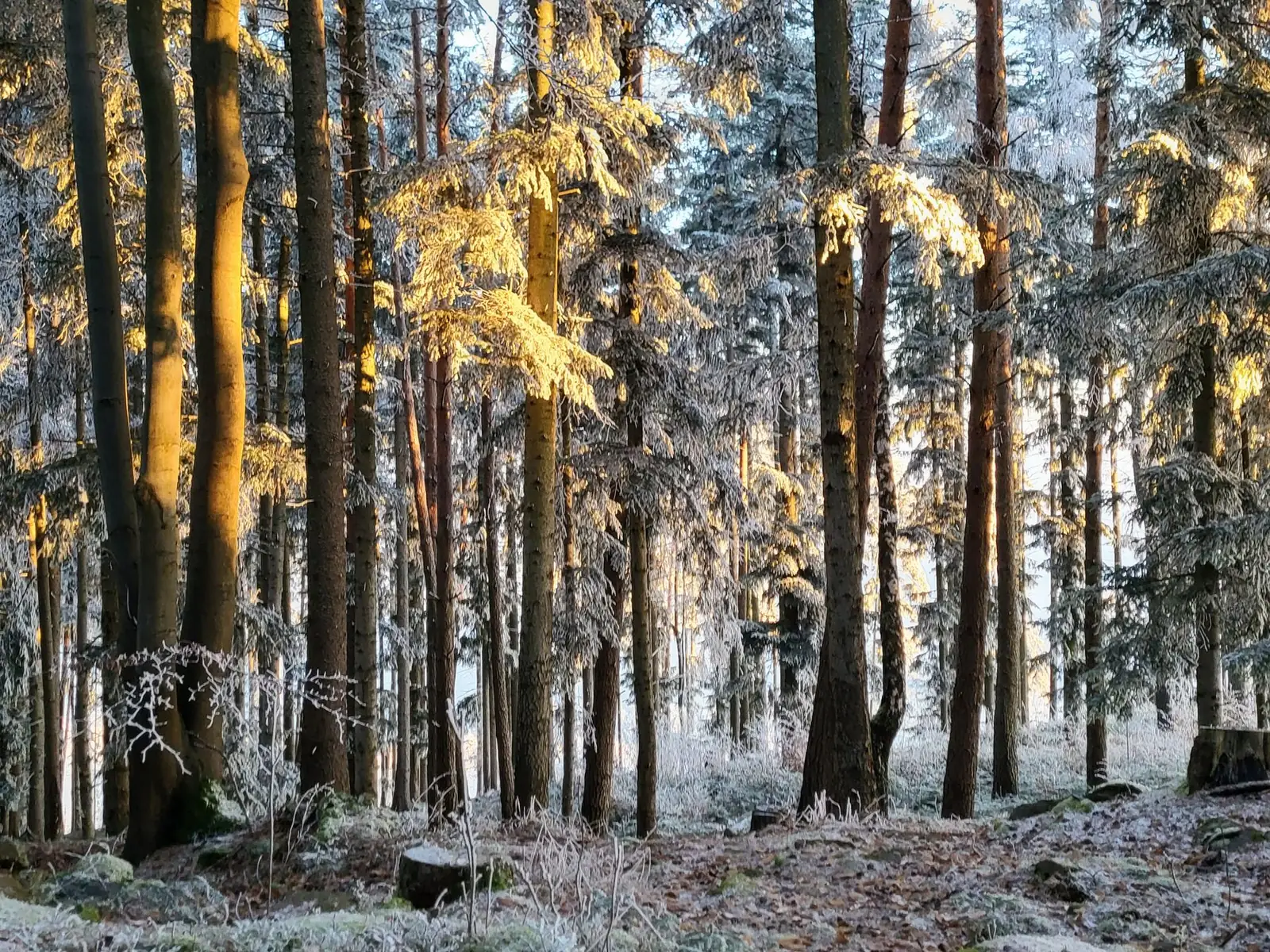
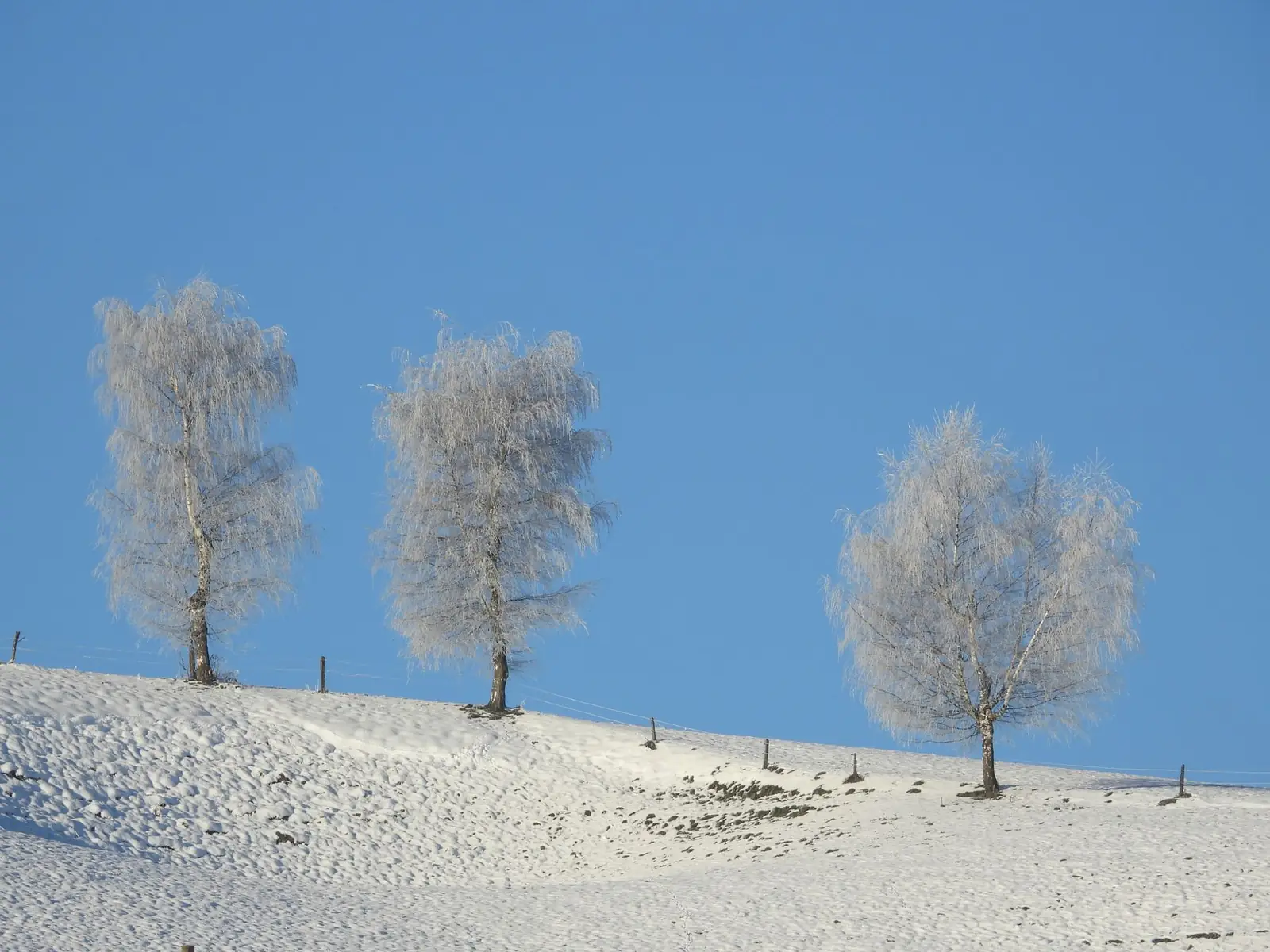
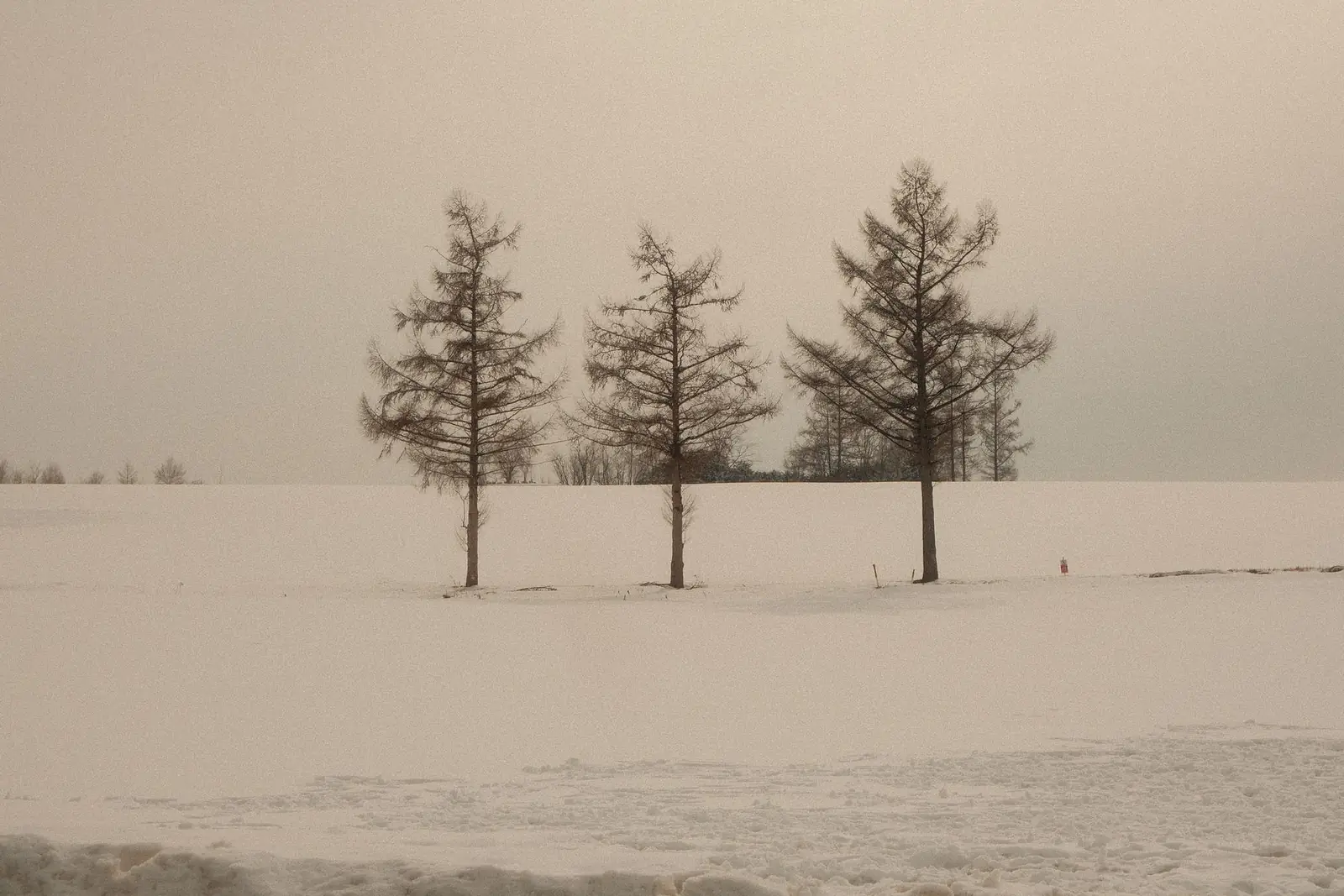
The photograph of three trees on one hill is a good image to point to: three, and one.

Christ, the present moment
On the page: Within the Trinity, Jesus Christ is the Son. He is the present moment, the preserver of all that “is” right now. As long as we are alive, there will always be a present moment, which we can either notice, or miss while we are caught up in the past or future.
This connects to the name God gives at the burning bush: "I AM THAT I AM" (Exodus 3:14), and to Jesus' words, "Before Abraham was, I am" (John 8:58). Not "I was" or "I will be", but "I am". The divine is always found in the present tense.
You might ask the circle: "Where do you most often go when you leave the present: into the past, or into the future?" No answers needed out loud.
Let people sit with the idea that Christ is to be met here, in this moment, by this fire, in these woods, and not somewhere else or at some other time.
The totality of our lives
On the page: Creator, preserver, destroyer. The past, present and future: we see in the Trinity the whole of our lives. One journey. The Trinity represents the journey we are on in this life, and how to go about that journey. All One. Each is part of a whole life, and therefore all is One. One story. Just as a story has a beginning, middle and end, it is only one story.
This sheet gathers up the teaching. The three are not three separate lives, but one life seen whole: where we came from, where we are, and where we are going.
You might ask: "If your life were a book, what chapter would you say you're in right now?" Let people answer in their heads, or share briefly if they want to.
Then bring it back to presence: we can't rewrite the chapters behind us, and we can't read the ones ahead. The only page we can actually live is the one in front of us.
The triangle
On the page: FATHER · FUTURE HOLY GHOST · PAST SON · PRESENT one In Christianity the Trinity is represented as a triangle: three separate lines creating one geometric shape. It is found everywhere in nature and has the quality of stability, like a three-legged stool. This balance is the key to showing us how to live peacefully and with presence.
A three-legged stool never wobbles, even on uneven ground. That is why milking stools were made with three legs. Four legs can rock; three always find their footing.
You might draw a triangle in the snow or the dirt with a stick, or with three sticks laid on the ground in the middle of the circle.
In traditional Christian art, God the Father is sometimes painted with a triangular halo behind his head, a sign of the Trinity. If you have a picture of one, this is a lovely moment to pass it around.
The lesson: when past, present and future are in balance, held lightly, we are steady. When we lean too hard into regret or worry, we tip.

Threes in every tradition
On the page: In our own experience. Time is a triad: past, present and future; and birth, life and death. In Druidry. The triquetra (the Celtic trinity knot), the shamrock and the poetic Triads. In Asatru. The valknut, the Norse trinity symbol. In the old trinities of gods. The Kemetic (ancient Egyptian) trinity of Osiris, Isis and Horus, and the Hindu trinity of Brahma, Vishnu and Shiva. We find it in all cultures and spiritual traditions across the earth.
The pattern of three appears wherever people have looked deeply at life.
The shamrock is a lovely one to linger on. The old story tells that Saint Patrick used the three-leaf shamrock to teach the Trinity in Ireland: three leaves, one plant. If you have clover leaves pressed or dried, pass them around.
The Welsh Triads are old sayings grouped in threes, used by bards to remember stories and wisdom. You might share one in your own words, or ask the circle for three things that make a good life.
There is no need to go deeply into each tradition. The point is simply that the shape of three-in-one is woven into how people everywhere have understood time, life and the sacred.
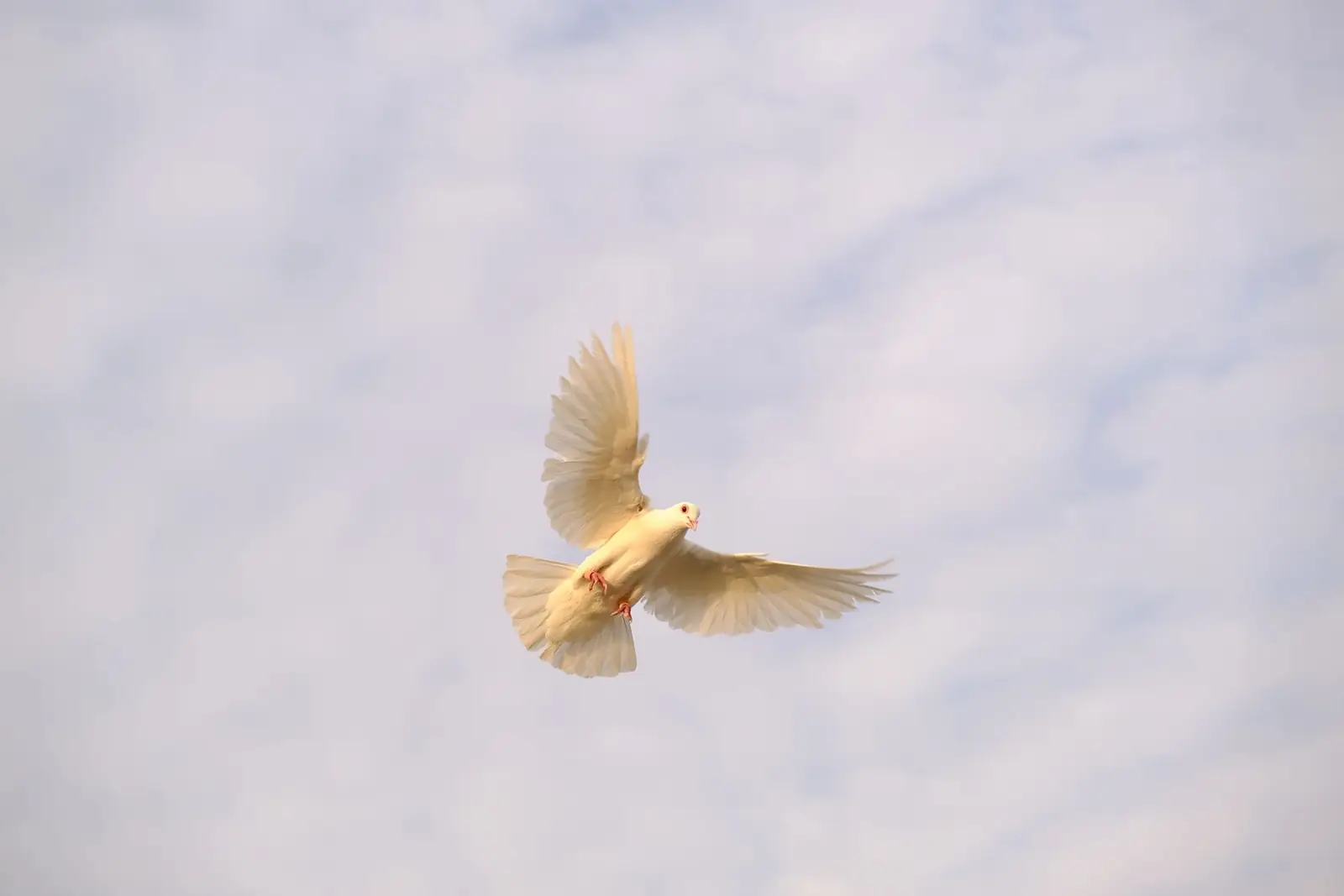
“And Jesus, when he was baptized, went up straightway out of the water: and, lo, the heavens were opened unto him, and he saw the Spirit of God descending like a dove, and lighting upon him: And lo a voice from heaven, saying, This is my beloved Son, in whom I am well pleased.”
On the page: “And Jesus, when he was baptized, went up straightway out of the water: and, lo, the heavens were opened unto him, and he saw the Spirit of God descending like a dove, and lighting upon him: And lo a voice from heaven, saying, This is my beloved Son, in whom I am well pleased.”
This is one of the few moments in scripture where all three appear together: the Son rising from the water, the Spirit descending like a dove, and the voice of the Father from heaven.
Notice that it happens at a single moment, in one place, by a river. The heavens opened "straightway", right then. The Trinity is not only an idea; it is something met in a living moment.
You might ask: "What would it mean to hear, right now, 'You are my beloved, and I am well pleased with you'?" Let a moment of quiet follow.

Rose
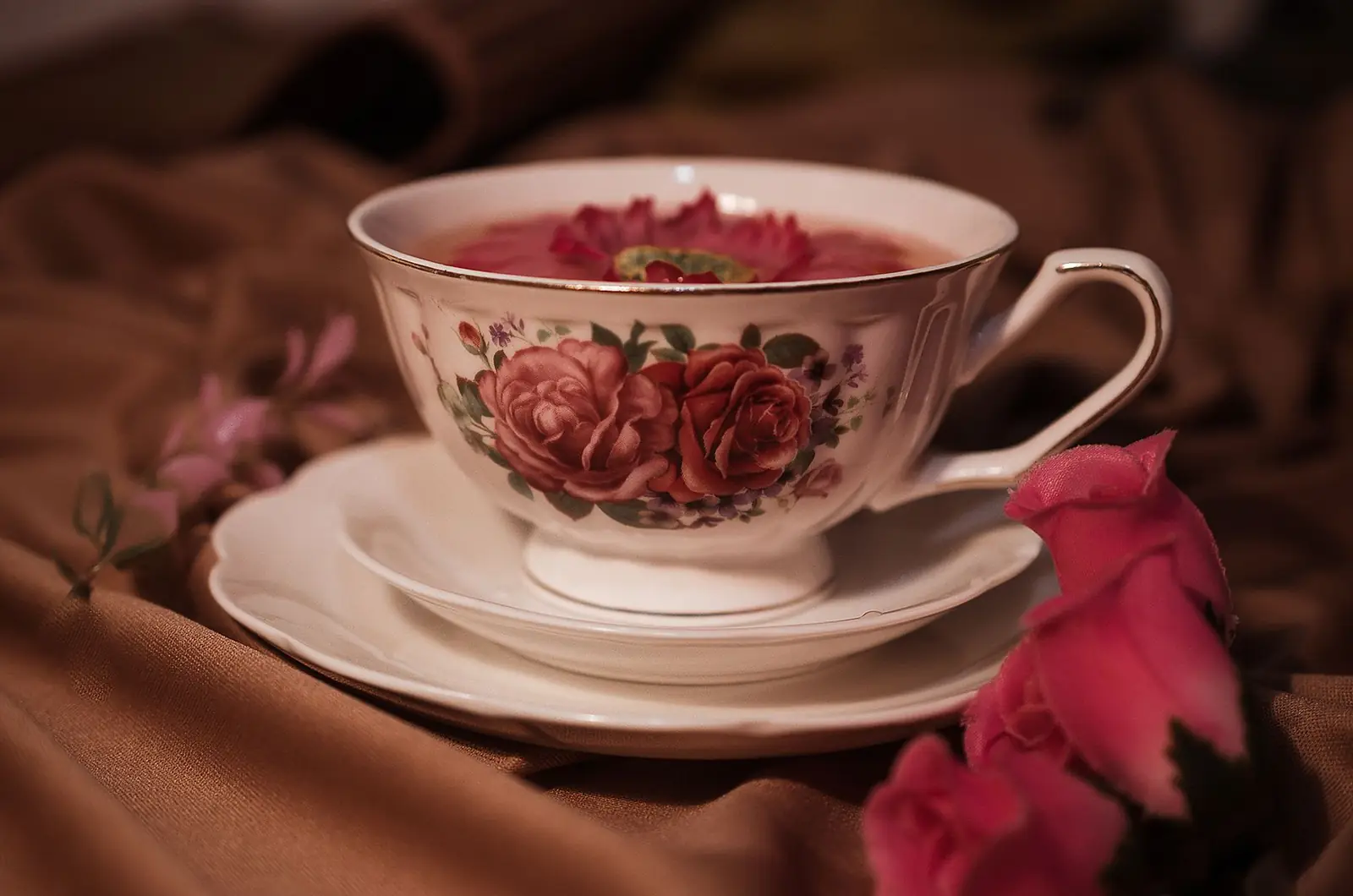
On the page: Rose is an herb for presence. “Stop and smell the roses.” The medicine begins as soon as we look at it and take in its beauty. Next, when we smell it, it brings us joy, if it is one of the fragrant varieties. It brings us directly into the present.
Before you say anything about the rose, hand one around the circle, or hold one up, and invite people simply to look at it for a few breaths. Then to smell it. Let the plant do its work first.
Afterwards you might say: "Did you notice? For those few moments, you weren't anywhere else. That is what the rose does."
If you are using a rose that has been out in the cold, its scent may be faint at first. Cupping it in warm hands for a minute brings the fragrance out.

A medicine for the heart
On the page: Arise, arose. When we are present, we arise to a more enlightened state, and the past tense of arise is arose… a rose. Worn over the heart. We wear a corsage of roses over our heart for special occasions, when we want to celebrate our love. For a broken heart. Rose is good for the heart, and gently calming, especially for those who have a broken heart. Oil and tea. Rose oil is used in aromatherapy to great effect. Rose petals can be added to herbal teas, and mix well with a chai-type tea.
The word play is worth enjoying: "arise, arose… a rose." It often brings a smile.
Herbalists have long used rose for grief and heartache. It is gentle, safe for most people, and lovely in tea. Its scent alone can soften a hard day.
A few words of care if people want to use rose at home:
- Only use petals from roses grown without sprays for tea. Florist roses are usually heavily treated and are not safe to eat or drink.
- Pure rose essential oil is very strong and very costly. Use it diluted in a carrier oil, such as jojoba, and try a little on the inside of the wrist first.
- Rose is a gentle comfort for the heart. It is not a replacement for care from a doctor or counselor when grief is very heavy.
Sharing the rose
On the page: Give each person a fresh fragrant rose to take home, or pass around some rose oil for each person to put a little on themselves, or serve some tea with rose petals in it.
Choose whichever suits your gathering and the season.
A fresh rose to take home: lovely in winter, when color is scarce. Wrap the stems in a damp paper towel and a little foil so they last the trip home.
Rose oil: offer it already diluted in a small roller bottle or dish of carrier oil. Ask before offering it to each person, and let anyone with scent sensitivities pass.
Rose tea: a pot of black or chai tea with a spoonful of dried, food-grade rose petals is warming by the fire. Have a caffeine-free option too, such as a rose and chamomile blend.
Whichever you choose, let it be a moment of quiet enjoyment rather than a lesson.

A Christmas Carol
On the page: By Charles Dickens, in the picture-book adaptation for children by Adam McKeown, illustrated by Gerald Kelley. What does Scrooge learn about being present?
Read the picture book aloud, holding it so the circle can see the illustrations.
This story fits today beautifully. Scrooge is visited by three spirits: the Ghost of Christmas Past, the Ghost of Christmas Present and the Ghost of Christmas Yet to Come. Past, present and future, the same three we have been talking about.
Scrooge is a man so trapped in old hurts and so fearful for his money that he misses the life in front of him: his nephew's warm invitation, the needs of the Cratchit family, the joy of the season. When he finally wakes up on Christmas morning, he throws open the window and is overjoyed simply to be alive, here, now, with another chance.
After reading, ask the question on the sheet and let a few people answer: "What does Scrooge learn about being present?"

“I will live in the Past, the Present, and the Future. The Spirits of all Three shall strive within me. I will not shut out the lessons that they teach.”
On the page: “I will live in the Past, the Present, and the Future. The Spirits of all Three shall strive within me. I will not shut out the lessons that they teach.”
These are Scrooge's own words, near the end of the story, when he has seen all three spirits.
Notice that he doesn't promise to forget the past or ignore the future. He promises to live in all three: to learn from the past, to care for the future, and to be awake in the present. That is the same balance as the triangle and the three-legged stool.
You might read it twice, and then ask: "Which of the three spirits would you most need to visit you this season?"
Peace, rest and inspiration
On the page: Being present gives us peace and rest. It is how we enter the flow state which allows us to create, just as God the Father is the Creator. We become connected to God so strongly that we can receive the direct revelations available to all of us: what the Greeks called “the Muses”. And presence lets the Holy Ghost carry away the ghosts of the past.
This sheet ties the whole teaching together. When we are present (the Son), we open to inspiration and creation (the Father), and we can let the Spirit carry away the ghosts of the past (the Holy Ghost) that weigh us down.
The "ghosts of the past" is a lovely link back to Scrooge, and to the cedar's "cold ghosts" from our last gathering.
Many people know the feeling of flow: time disappears while gardening, painting, playing music or walking. You might ask: "When do you lose track of time in a good way?" Those moments are glimpses of full presence.
This is also a good moment to introduce the walk: "Let's go and practice being present, together and in silence."

A silent walk
On the page: What do you notice about the four elements of earth, air, water and fire? Does anyone know what the fifth element is? This will be a silent walk. Pick one of the five elements to focus on.
Ask the question on the sheet and let people guess the fifth element. The answer is ether, sometimes called spirit or quintessence (literally "the fifth essence"), the subtle element that holds the other four.
Explain that the walk will be silent: no talking from when we leave the circle until we return. Silence makes presence much easier; there is nothing to do but notice.
Care on the trail:
- Walk slowly, at the pace of the slowest walker. Presence is not a race.
- In winter, keep to the flattest, safest paths and watch for ice. Offer walking sticks, and ask someone steady to walk beside anyone who would like an arm.
- Anyone who would rather not walk is welcome to stay by the fire and do the same practice there. The elements are all around the fire too.
- Agree on a simple signal to turn back, such as a bell or a raised hand.
The five elements
On the page: Earth. Ground, soil, plants and trees, animals, your own body. Air. Wind, breath, smells, birds, thoughts flowing through your mind. Fire. Light, sun, movement, energy in the land and yourself. Water. Creek, precipitation, moisture in the plants and land and yourself, memories for yourself and of the land. Ether. Imagination (what does the land want, and what do you want?), inspiration, daydreaming.
Read through the five elements before setting out, and invite each person to choose one. They don't need to say which.
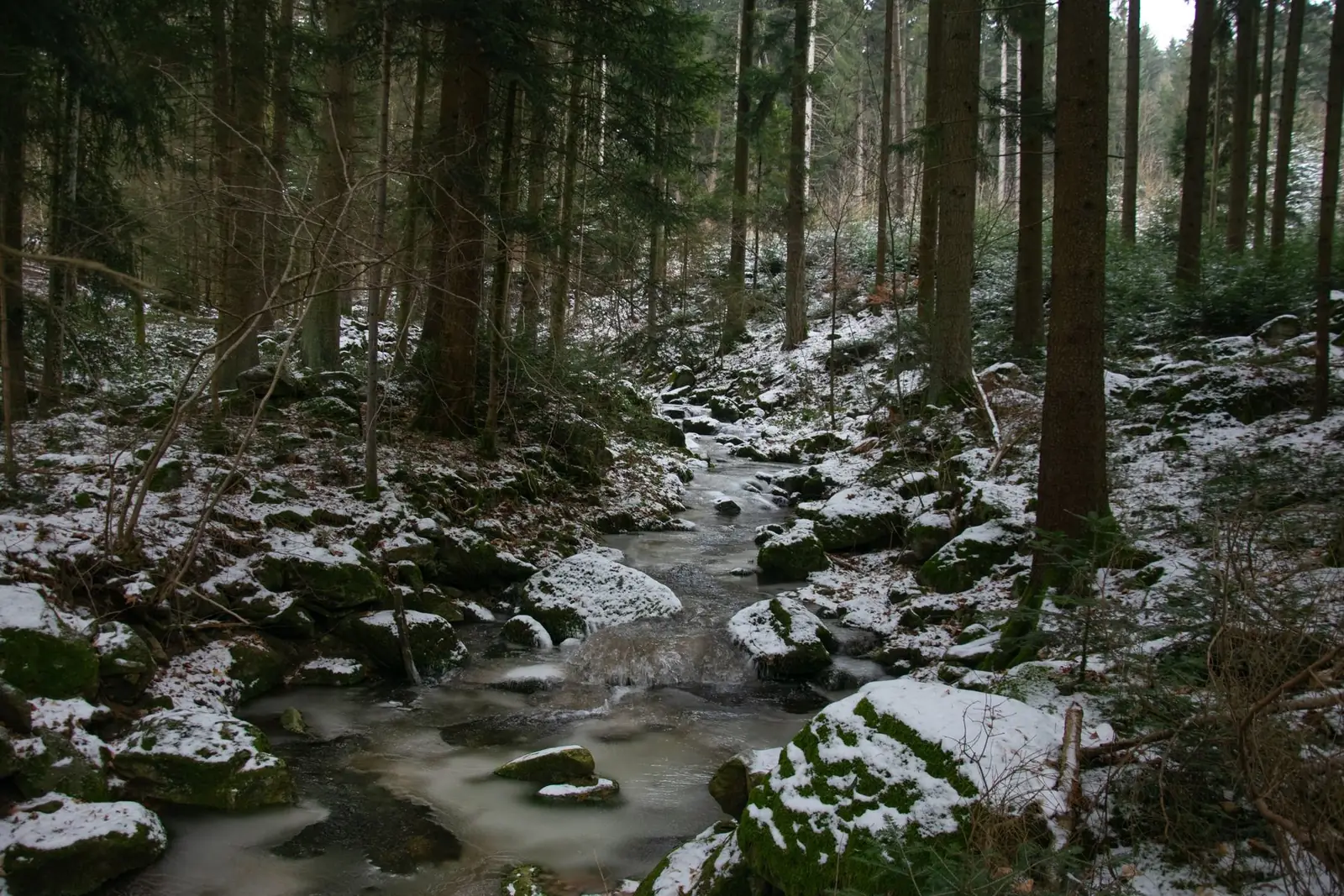
In winter, the elements show themselves in new ways: earth is frozen and still; air is sharp and clear, and you can see your own breath; fire is the low sun and the warmth in your own body; water is snow, ice and frost; ether might be the silence of snow-covered woods.
Allow about 20 to 25 minutes, depending on the cold and the walkers. Lead the group back to the fire gently, still in silence, so the quiet carries into the journaling.

By the fire
On the page: Sit by the fire and write down what you learned from your nature walk. Share with the group during our sharing time, if you wish.
Have journals or paper and pencils ready, and a few clipboards or books to lean on. Pencils work better than pens in the cold.
Give about 10 minutes. Keep the silence going for the first few minutes; then it's fine for the circle to come back to soft conversation.
Some gentle prompts, if people need them:
- What did your element show you?
- What did you notice that you've never noticed before?
- Where did your mind wander, and what brought you back?
Children can draw instead of writing. Some people may simply want to sit and watch the fire, and that is presence too.
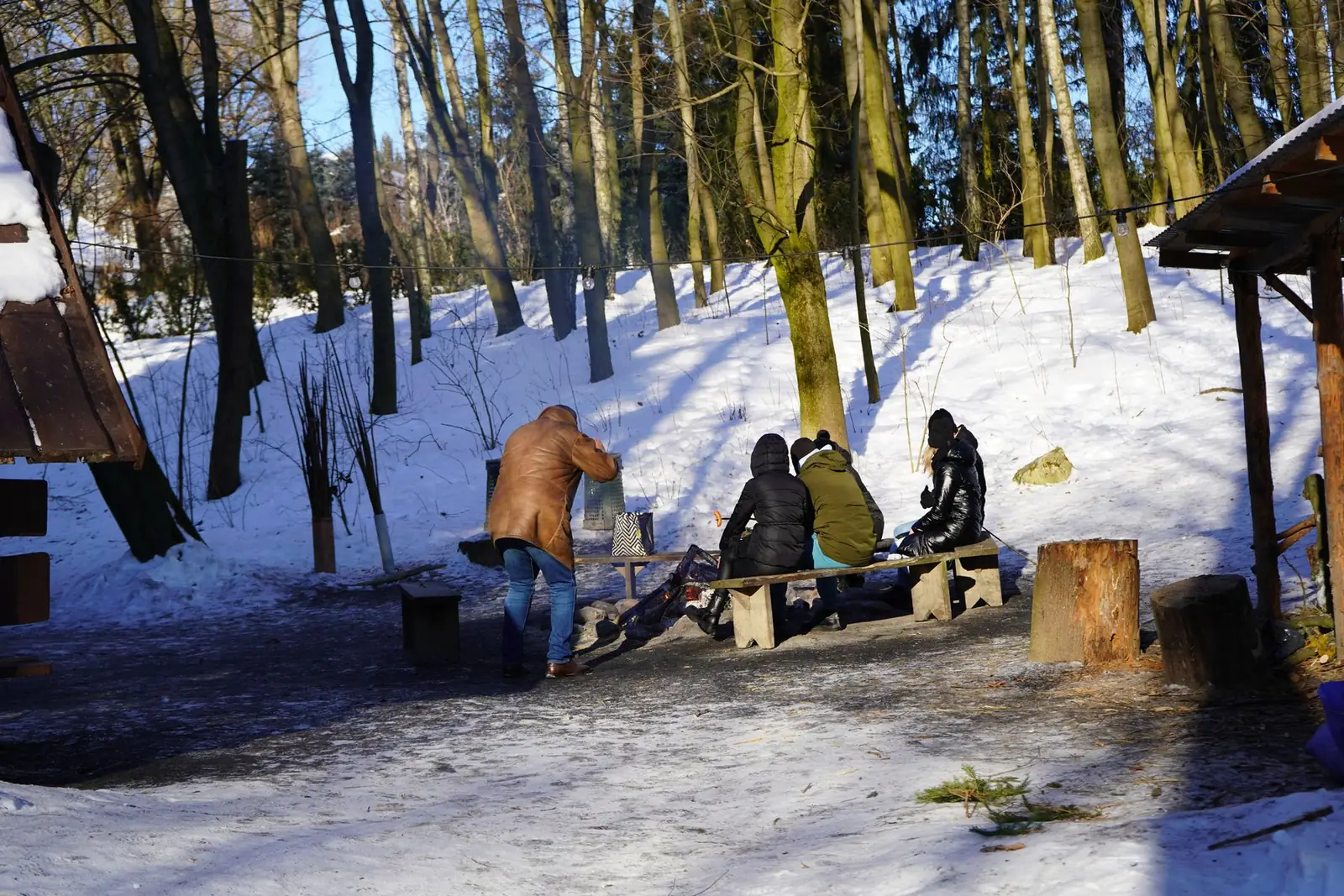
A gift from your sit spot
On the page: Share a leaf, seed, feather or stone from your sit spot over the past week, and a few words about where you found it. Optional: leave your item in the stone circle before you go, as an offering, and say a little prayer.
Bring out the snacks and hot drinks, and let people settle by the fire.
A sit spot is a single place outdoors that a person returns to again and again, to sit quietly and notice what changes. If some were given that practice at an earlier gathering, invite them to share what they brought. Newcomers can share something they found on today's walk instead, or what they wrote in their journal.
Begin the round yourself to show how simple it can be.
The offering in the stone circle is a lovely, simple close: a small act of giving back to the land. Natural items only, so the land is left as we found it. Before people leave, you might invite anyone who would like a sit spot of their own to choose one this week and visit it a few times before the next gathering.
O Thou in Whose Presence
On the page: O Thou, in Whose presence my soul takes delight, On Whom in affliction I call, My comfort by day, and my song in the night, My hope, my salvation, my all. Where dost Thou, dear Shepherd, Resort with Thy sheep, To feed them in pastures of love? Say, why in the valley of death should I weep, Or alone in this wilderness rove? He looks, and ten thousands of angels rejoice, And myriads wait for His word; He speaks, and eternity, filled with His voice, Re-echoes the praise of the Lord.
Invite everyone to stand for the closing song. It is a beautiful choice for today: the very first line is about presence, "O Thou, in Whose presence my soul takes delight."
The words were written by Joseph Swain, an English Baptist pastor, in 1791. In America they were set to the folk tune DAVIS and sung in the shape-note tune books of the early 1800s. The hymn draws on the Song of Solomon and echoes Psalm 23, "the valley of death" and the Shepherd.
You can play the recording linked on the next page and sing along, or sing it together unaccompanied once people know the tune.

Dear Shepherd
On the page: Dear Shepherd, I hear and will follow Thy call; I know the sweet sound of Thy voice. Restore and defend me, for Thou art my all, And in Thee I will ever rejoice. Listen to the tune ›
The button on this sheet opens a recording of the hymn on YouTube in a new tab, so you can play it for the circle or learn the tune beforehand. Check before the gathering that your device can play it where you'll be, and download it ahead of time if there's no signal outdoors.
After the song, you might close with a simple blessing, such as: "Go in peace. May you find rest in the present moment, and may you meet God there."
Remind people to take their rose, and their journal, home with them.

Be here now
On the page: Thank you for being present with us. May you carry the gift of the present home with you. Register for a gathering Join us next time Our Gatherings What we do together Write to Jean Questions, or just hello The Mystery School Twelve courses to explore
Leave this page on the screen as people say their goodbyes.
Mention the next gathering if you know the date, and let people know how to register. Invite anyone who would like to stay in touch to reach out.
Before you leave the circle: make sure the fire is fully out, and gather up any paper, cups or litter so the land is left as we found it.