
Lay Your Burdens Down

Lay Your Burdens Down
On the page: A gathering for the season of letting go Crossing Hedgerows Sanctuary
Have this page on the screen as people arrive, so the first thing they see is the name of our gathering and the autumn wood.
The whole gathering runs about two hours. A rough guide: opening circle 20 minutes, cedar and story 20 minutes, the walk and the ritual of release 45 minutes, prayer and sharing 25 minutes, scripture and the closing song 10 minutes. Let the day set the pace; the times are only a guide.
Before anyone arrives: lay the fire, set out chairs or blankets in a circle, have the cedar bundle, a lighter and a fireproof dish ready, set the snacks to one side, and have the Pumpkin Jack book and the Glenn Kaiser recording close at hand.
To move through these pages, tap the right side of the page, press the right arrow key, or use the arrow at the bottom. Press N at any time to show or hide these notes.

“Come unto me, all ye that labour and are heavy laden, and I will give you rest.”
On the page: “Come unto me, all ye that labour and are heavy laden, and I will give you rest.”
This verse is the doorway into everything we do today. You might read it aloud once everyone is settled, slowly, and let a moment of quiet follow.
You could say: "Today is about rest. Not the rest of doing nothing, but the rest that comes when we finally set something down that we have carried too long."
There is no need to explain the verse. Let it sit with people. We will come back to the same promise of peace near the end, with the words of John 14:27.

Our gathering at a glance
On the page: Opening circle. Welcome, our agreements, a round of thanks and the Doxology. Plant magic. Eastern White Cedar, the Tree of Life, clears the circle. A story. Pumpkin Jack by Will Hubbell. A walk and a ritual of release. We gather, we speak, we let go. Peace and sharing. The Druid Prayer for Peace, a snack by the fire, and one word each. Closing. John 14:27 and our song, Since I Laid My Burdens Down .
A quick look at the day helps newcomers relax, because they know what is coming and nothing will take them by surprise.
You do not need to read every line. A simple overview is enough: "We will open in a circle, meet a very special tree, hear a story, take a walk together, share by the fire and close with a song."
Mention practical things here too: where the restroom is, that the walk is gentle and on easy paths, and that anyone who would rather stay by the fire during the walk is welcome to.

Welcome
On the page: Welcome everyone in with an introduction and gather into a circle. Every one of you belongs here.
Greet people warmly as they arrive and, when everyone is here, invite them into the circle. Make room for children and elders first, and offer a chair to anyone who would rather not stand.
Introduce yourself and the place where you gather in a few sentences: who you are, what this place is, and why we gather. If there are newcomers, name that gently: "If this is your first time with us, you are so welcome. There is nothing you need to know or do. Just be here."
A circle has no front and no back. Everyone can see everyone else, and no one is more important than anyone else. You might say a word about that, because it is part of why we gather this way.

Our agreements
On the page: Go over the circle agreements together, so everyone knows how we care for one another today.
Agreements make the circle a safe place, especially today, because we will be touching on things that hurt.
Go over your own circle agreements. If it helps, here are some that many circles use:
- We speak from the heart and listen with the heart.
- What is shared in the circle stays in the circle.
- We do not fix, advise or correct one another. We simply listen.
- Anyone may pass. Saying "pass" is always welcome.
- We care for the land and leave it as we found it.
Ask the group whether anyone would like to add an agreement, and whether everyone can say yes to them. A nod or a show of hands is enough.

A round of thanks
On the page: Go around the circle and let each person share their name and one thing they're thankful for today. Leader: begin the round yourself, to show how simple it can be. A single sentence is plenty.
Begin the round yourself, so people hear how short and simple it can be. For example: "My name is ____, and today I'm thankful for the smell of the leaves this morning."
Then turn to the person beside you and let the round move around the circle in one direction. Children often love this part; let them share too.
If someone is shy, a smile and "pass" is fine, and you can come back to them at the end of the round if they would like.
Gratitude opens the heart. It is good to begin a day about letting go with remembering what we have been given.

Praise God, from whom all blessings flow; Praise him, all creatures here below; Praise him above, ye heavenly host; Praise Father, Son, and Holy Ghost. Amen.
On the page: Praise God, from whom all blessings flow; Praise him, all creatures here below; Praise him above, ye heavenly host; Praise Father, Son, and Holy Ghost. Amen.
Invite everyone to stand together for the Doxology. Many people will know the tune by heart; if some don't, it is short and easy to pick up by the second time through.
You might sing it twice: once with you leading, and a second time with everyone joining in fully.
The words were written by Thomas Ken in the 1600s and have been sung for over three hundred years. When we sing them here, among the trees, "all creatures here below" takes on a lovely meaning: the birds, the deer, the trees themselves are part of the praise.

Autumn is a season for letting go, just as the trees let go of their leaves.
On the page: Autumn is a season for letting go, just as the trees let go of their leaves.
Read the words on the sheet, and then the rest of the passage: "...and the leftover remains of the harvest begin to rot and decay and return to the earth."
This is the heart of the day. The trees do not cling to their leaves. They let them fall, and the fallen leaves feed the soil that will feed next year's growth. Nothing is wasted.
You could invite everyone to look up at the trees around the circle for a moment. If leaves are falling, let people watch them in silence. Let the land itself teach the lesson before we put it into words.
Then say: "We begin by clearing old energy from the circle with a plant that knows how to move energy." This leads into the cedar.

Eastern White Cedar
On the page: We begin by clearing old energy from the circle with a plant that knows how to move energy. Thuja occidentalis · Arborvitae · the Tree of Life
Eastern White Cedar grows all across the northern Great Lakes, along lakeshores, in swamps and on limestone ridges. Many of us walk past it every day without knowing its name. This photograph is a cedar grove in Door County, Wisconsin, on the shore of Lake Michigan.
If you have a cedar on the land, this is a beautiful moment to point to it, or to pass a small sprig around the circle so everyone can smell it. Crush a scale-leaf between your fingers: the scent is warm, clean and sharp.
Its name, arborvitae, is Latin for "tree of life". The story often told is that, in the winter of 1535 to 1536, the Iroquoian people of Stadacona (where Quebec City stands today) showed Jacques Cartier's sick crew a tea made from a tree, most likely this cedar, that saved them from scurvy. Not long after, it was being called the tree of life.

A plant that moves energy
On the page: An aromatic. Its energy stimulates circulation, moving energy upwards and outwards. Aromatics always do this. For the body. In traditional herbal practice it is used for cold, damp conditions, such as congestion or a damp cough. For the spirit. As spiritual medicine it clears heavy or stagnant energy and offers protection. For spaces. It is a medicine to purify energy within spaces, as well as a remedy in the body.
Herbalists describe plants by their "energy": whether they warm or cool, dry or moisten, and which way they move things. Aromatics, plants with warming essential oils like cedar, sage, rosemary and clove, move things up and out. That is why the smell of cedar seems to open your chest and clear your head.
The same idea carries over to spaces: what is heavy, stuck or stale is lifted and moved along.
A gentle word of care, if anyone asks about using cedar at home: Thuja is a strong plant. It should not be taken internally except under the guidance of a qualified herbalist, and it is not for use during pregnancy. Today we only use its smoke and its scent.

The Tree of Life
On the page: Herbalist Matthew Wood says aromatics such as this, with their warming essential oils, are like “the smudge sticks that get rid of cold ghosts.” It is often turned to during times of spiritual stress, exhaustion or anxiety, to help ground and re-align a person’s path.
Matthew Wood is a well-known American herbalist and teacher whose books on the energetics of plants have shaped a generation of herbalists. His phrase "cold ghosts" is a wonderful image: old, chilly, lingering feelings that hang about a person or a room. Warm aromatics move them along.
You might ask, without needing answers out loud: "What cold ghosts have been following you this season?" Let people sit with that question for a moment. It quietly prepares the heart for the walk and the ritual of release later.
The Tree of Life also has a deep echo in scripture: the tree in the garden in Genesis, and the tree beside the river of life in Revelation 22, whose leaves were "for the healing of the nations."
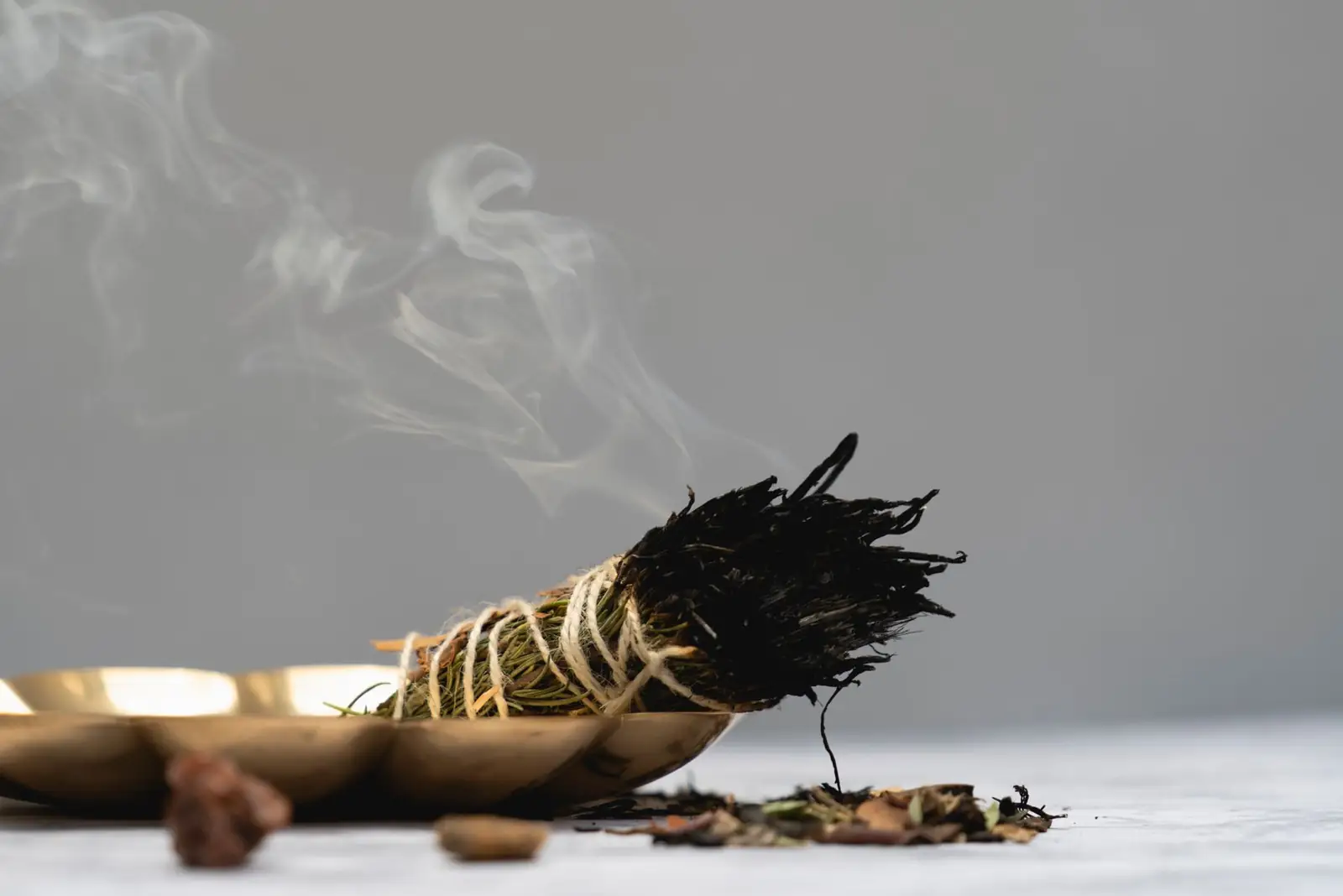
Clearing the circle
On the page: Visit and thank an Eastern White Cedar if you have one. Next, purify the circle with smoke from a smudge bundle made with Thuja occidentalis , also known as Arborvitae, or the Tree of Life.
If you have a cedar on the land, walk over to it together, or have someone bring a sprig back to the circle. Thank the tree aloud, simply: "Thank you, cedar, for your medicine today."
Light the bundle so it smolders, not flames, and hold it over a fireproof dish. Walk slowly around the outside of the circle, then move gently from person to person. Each person can draw the smoke toward their face and heart with their hands, or simply stand in it.
Care and safety:
- Ask before smudging each person, and let anyone decline. Some people have asthma or are sensitive to smoke; they can step back, and the smoke can be offered from a distance.
- Keep the bundle over the dish, and fully put it out afterwards in sand, soil or water.
- Outdoors, notice the wind and stand where the smoke drifts away from faces.

Pumpkin Jack
On the page: As we allow the plant medicine to work its magic within the circle, let’s settle into listening to this story by Will Hubbell called Pumpkin Jack . Just as Tim must let his pumpkin go back to the earth for there to be new growth, so it is with us.
Read Pumpkin Jack aloud from the book, holding it so the circle can see the pictures. It is a picture book, so it is quick to read, and the illustrations tell much of the story.
In the story, a boy named Tim carves a jack-o'-lantern he loves. When it begins to soften and decay, he can't bear to throw it away, so he puts it out in the garden. Through the seasons the pumpkin returns to the earth, and from it new pumpkin vines grow.
After reading, let a moment of quiet pass. Then read the line on the sheet: "Just as Tim must let his pumpkin go back to the earth for there to be new growth, so it is with us."
You might ask: "What is something in your life that has done its work and is ready to go back to the earth?" There is no need for answers now. That question goes with us on the walk.

Nature walk and a ritual of release
On the page: Many traditions honor the act of letting go with our hands, and not only with our words. We are going to go on a nature walk to gather what we need for a simple ritual of release.
Explain the walk before you set out, so everyone knows what they are looking for: "As we walk, gather a few small things: stones, sticks, leaves, seed heads. Each one will stand for something you are ready to set down."
Walk slowly and mostly in quiet. This is not a hike. Let people wander a little, notice things and pick up what calls to them. Children can be wonderful guides here.
Keep it to natural things the land offers freely: fallen leaves, stones, sticks, pine cones. If someone would rather write a word on a slip of paper, bring paper and pencils; paper goes into the fire, not into the creek or the woods.
Allow about 20 to 25 minutes, and finish the walk at the water if you have it, or back at the fire circle.

Letting go with our hands
On the page: Gather. Small objects: stones, paper, anything you can hold. Name. Let each object stand for one painful memory or feeling. Go to the water or the woods. A creek, a lakeshore, the forest. Speak. Hold each object and speak the memory out loud. Release. Let it go with your body: throw it, bury it, or give it to the fire. Keep one. Keep one object as a witness. Try it with one painful memory.
Walk through the steps slowly, and then let people find their own spot, a little apart from the others, by the water, under a tree, or at the fire.
Speaking out loud can be a whisper. No one else needs to hear. Make that clear: "You can speak it so quietly that only you and God hear it."
Gentle guidance:
- Encourage people to start with one memory, not the heaviest one they carry. Today is a practice of letting go, not a time to open every wound at once.
- Stones can go into the water, leaves and sticks can be buried or laid on the forest floor, and paper can be given to the fire.
- This is a spiritual practice of release, not therapy. If someone is overwhelmed, sit with them, listen, and later gently encourage them to reach out for further support from a counselor or pastor if their burden is very heavy.
Allow about 15 minutes, then call everyone back softly, perhaps with a bell or a few notes of a song.
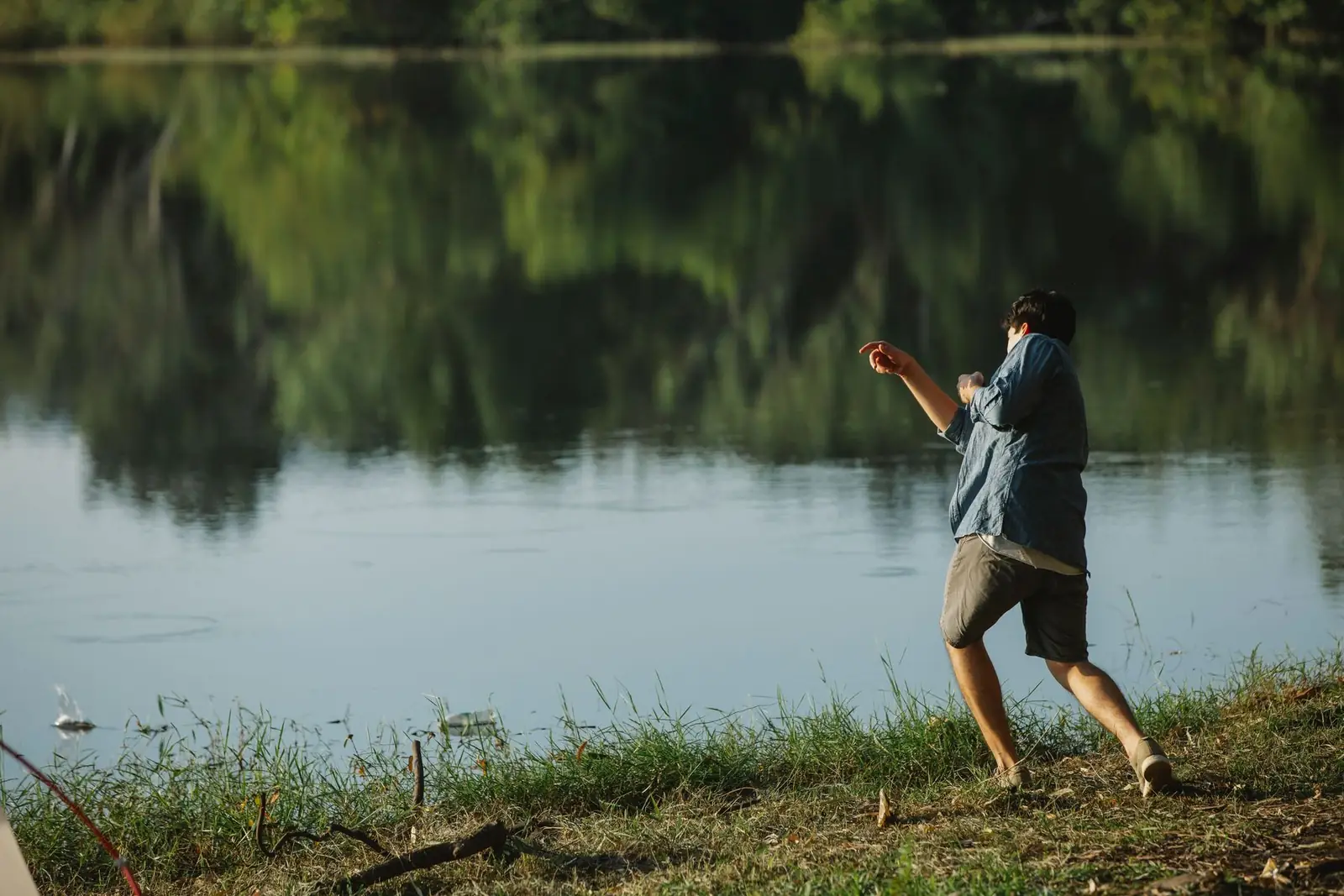
Let it go
On the page: Our hands can say what words cannot. When we hold something, speak it, and let it fly from us, the body joins the heart in saying: this has been seen, and it can be set down.
This sheet speaks to why the ritual works. We do not need to explain every hurt or understand it fully before we can let it go. Sometimes the body knows the way before the mind does.
Think of how it feels to drop a heavy bag you have carried a long way: the shoulders loosen, the breath comes back. A stone thrown into the water can carry something of that same relief.
If you threw a stone yourself, you might share, very simply, how it felt. Your honesty gives others permission.
Watch the ripples, if you are at the water. They spread, soften and disappear, and the water is still again.

The wound that’s held grows. The wound that’s released heals.
On the page: The wound that’s held grows. The wound that’s released heals. Most people are still carrying stones from decades ago.
Let this saying land in silence. Read it slowly, twice if you like.
"Most people are still carrying stones from decades ago." That line often brings a knowing nod or a laugh. We carry old hurts from childhood, old arguments, old griefs, long after the moment has passed. Today we set down one. Next season, perhaps another.
It is worth saying that letting go is not the same as forgetting, and it does not mean that what happened was all right. It means we no longer let it weigh us down.
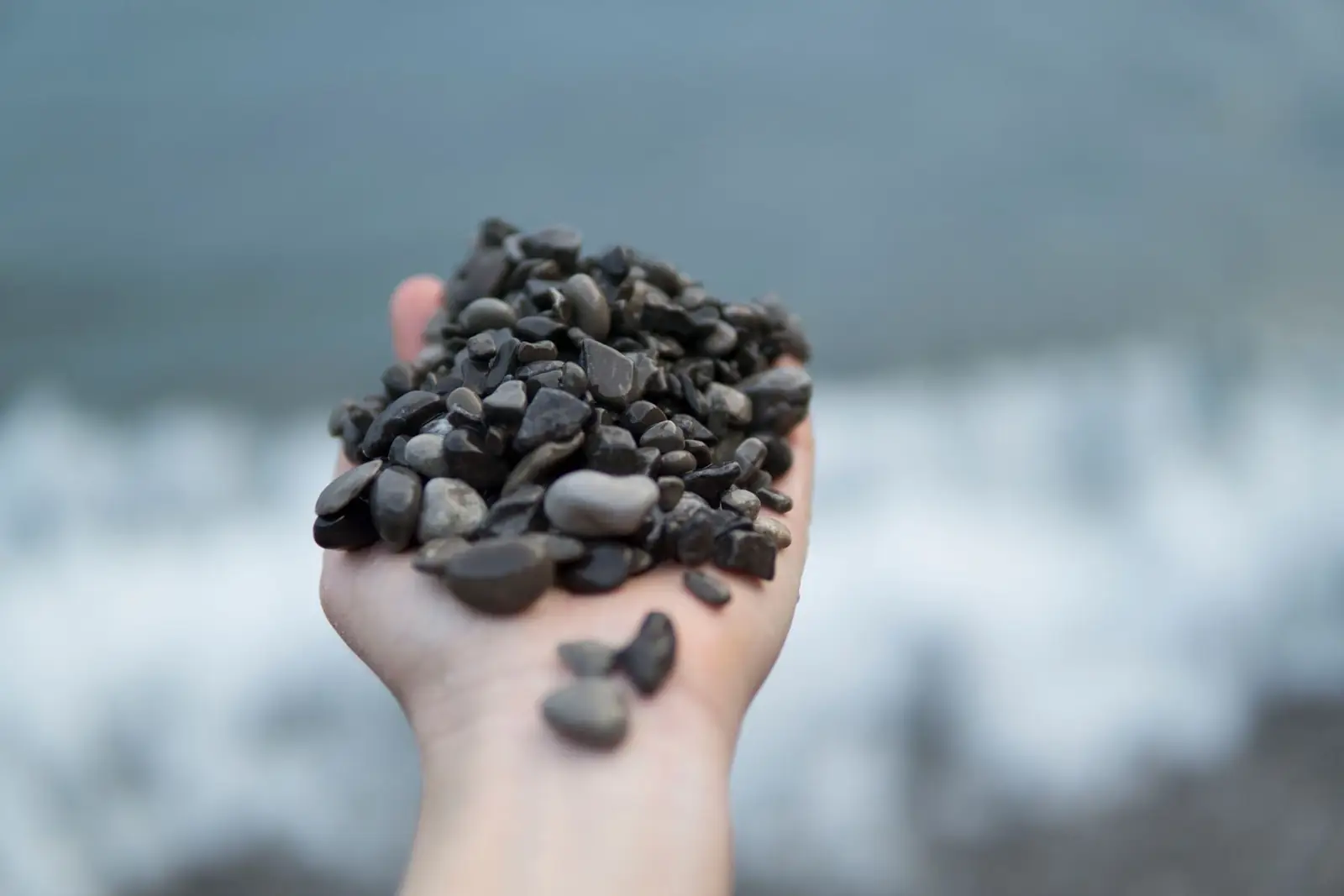
A witness
On the page: Keep one object as a witness. Put it on a windowsill, in a pocket, or beside your bed. It remembers, for you, the day you laid your burden down.
The witness is the one object we keep. It is not a burden; it is a reminder that we were brave enough to let something go.
Encourage people to take it home and put it where they will see it. When the old feeling tries to come back, the stone can say: "You already set that down."
In scripture, stones are often set up as witnesses. Joshua set up a stone under an oak and said, "Behold, this stone shall be a witness unto us" (Joshua 24:27). Jacob set up a stone pillar at Bethel where he had met God. Our little stones carry on that old and holy custom.
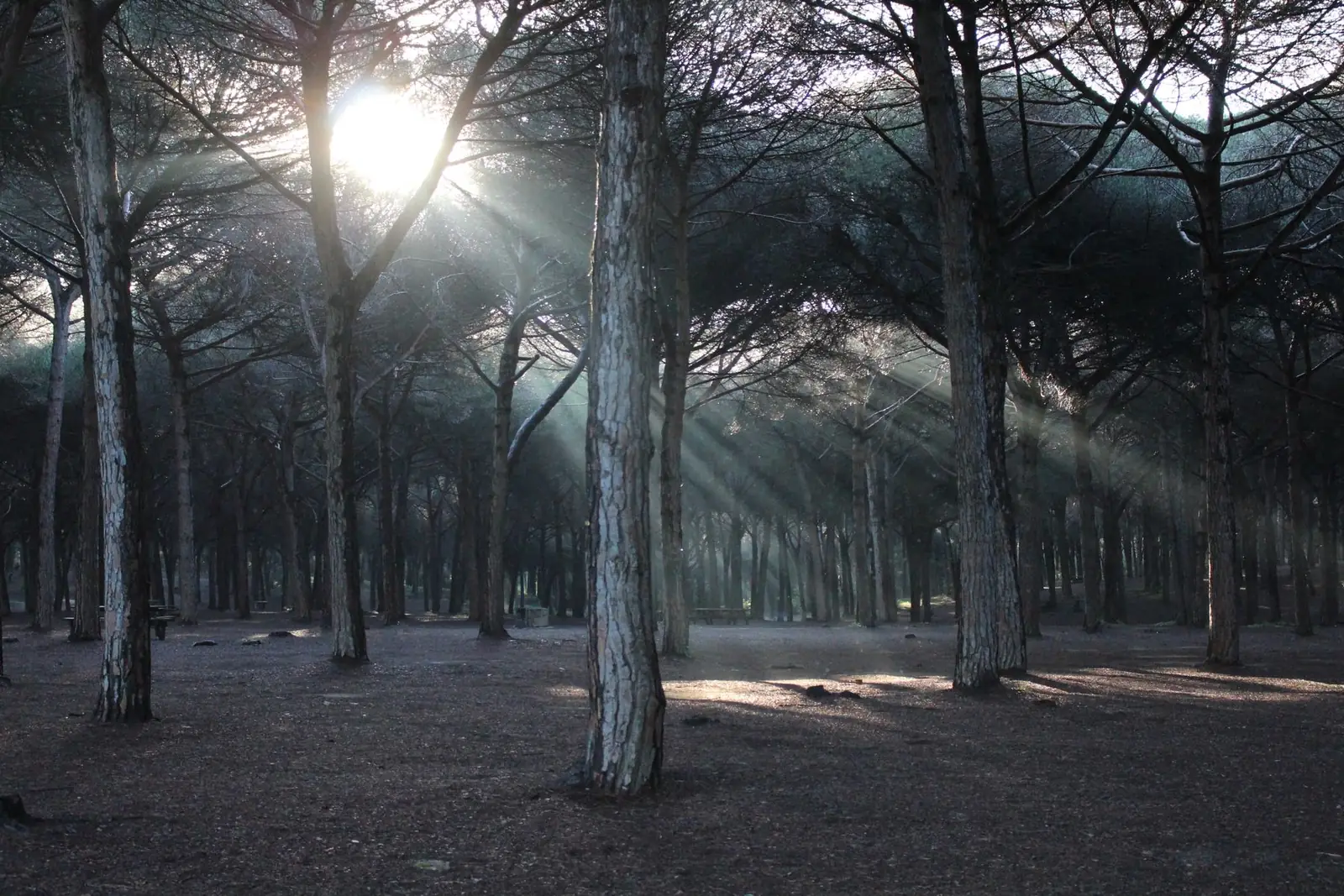
“Deep within the still center of my being may I find peace. Silently within the quiet of the grove may I share peace. Gently within the greater circle of humankind may I radiate peace.”
On the page: “Deep within the still center of my being may I find peace. Silently within the quiet of the grove may I share peace. Gently within the greater circle of humankind may I radiate peace.”
Once everyone is back in the circle, invite them to recite this prayer together. Read it once yourself, line by line, and then say it a second time all together.
Notice the movement of the three lines: from the still center of my own being, to the quiet of the grove around us, to the whole circle of humankind. Peace begins within, is shared with those near us, and then radiates out into the world. It is the same pattern as the ripples on the water.
Having just laid something down, people are often more open to peace than they were an hour ago. Let a long, quiet pause follow the prayer.

One word
On the page: Feel free to enjoy a snack while we connect with each other around the fire. Share one word that describes what you are seeking at Crossing Hedgerows Sanctuary. If you feel led to share more, you are welcome to do so. Leader: begin the round yourself, to show how simple it can be.
Bring out the snacks and let people settle around the fire. This part should feel relaxed and warm, like family.
Begin the round with your own one word, for example "rest", "belonging", "wonder" or "roots". Then let the round go around the circle. One word is plenty; some people will want to say more, and that is welcome.
Listen closely to the words people choose. They tell you a great deal about what your community is seeking, and they can guide the gatherings you plan in the seasons ahead.
Allow about 20 minutes. This is also a lovely time for newcomers to meet one another and for regulars to make them welcome.

“Peace I leave with you, my peace I give unto you: not as the world giveth, give I unto you. Let not your heart be troubled, neither let it be afraid.”
On the page: “Peace I leave with you, my peace I give unto you: not as the world giveth, give I unto you. Let not your heart be troubled, neither let it be afraid.”
Read the verse slowly once the sharing has come to a natural close.
These are words Jesus spoke to his friends on the night before he died, knowing they were about to face great sorrow. He did not promise them an easy road. He promised them his peace, a peace the world cannot give and cannot take away.
You might draw a thread back to the beginning of the day: "We began with 'Come unto me, all ye that labour and are heavy laden, and I will give you rest.' We end with 'Peace I leave with you.' In between, we laid something down."
Let a moment of silence follow before the song.

Since I Laid My Burdens Down
On the page: Chorus Glory, glory, hallelujah! Since I laid my burdens down. Glory, glory, hallelujah! Since I laid my burdens down! Verse I feel better, so much better Since I laid my burdens down. I feel better, so much better Since I laid my burdens down! Verse The cross before me and the world behind me Since I laid my burdens down! The cross before me and the world behind me Since I laid my burdens down!
Invite everyone to stand for our closing song. You can play Glenn Kaiser's recording of "Since I Laid My Burdens Down" and sing along with it, or simply sing it together unaccompanied. The tune is easy and repetitive, so people will catch it quickly.
This is a traditional African American spiritual, sung in churches and on porches for well over a century. Songs like this were born out of very heavy burdens indeed, and they carry a joy that has been tested by sorrow. It is a fitting song to end a day like today.
Clapping is welcome. Let it be joyful.

Glory, glory
On the page: Verse I’m goin’ home to be with Jesus Since I laid my burdens down. I’m goin’ home to be with Jesus Since I laid my burdens down! Verse Glory, glory I laid my burdens down. Yes, since, since I laid my burdens down. Since I laid my burdens down. Chorus Glory, glory, hallelujah! Since I laid my burdens down. Glory, glory, hallelujah! Since I laid my burdens down!
Finish with the chorus once more, perhaps a little slower the last time, and let the final line hang in the air.
After the song, you might close with a simple blessing, such as: "Go in peace. May you carry home only what is yours to carry, and may you walk a little lighter."
Remind people to take their witness stone home with them, and thank them for coming.

Walk a little lighter
On the page: Thank you for laying your burdens down with us. May you go home carrying only what is yours to carry. Register for a gathering Join us next time Our Gatherings What we do together Write to Jean Questions, or just hello The Mystery School Twelve courses to explore
Leave this page on the screen as people say their goodbyes.
Mention the next gathering if you know the date, and let people know how to register so you know who is coming. Invite anyone who would like to stay in touch to reach out to you.
Before you leave the circle: make sure the cedar bundle and the fire are fully out, and gather up any paper or litter so the land is left as we found it.